Tuesday, March 31, 2009

Michael5000's Guide to Awesome Science Fiction, Part III

Sprawling Fantasy Epics

"But wait," the dorkier among you are even now saying, "this series is supposed to be about Science Fiction! Why are we talking about Fantasy?" To which I say, eh, it's a blurry line, there are a lot of mutual fans, and as genres I consider them very similar in terms of their strengths, liabilities, and standards of excellence. Although really, it might just boil down to the fact that they were shelved together back in the Hometown5000 Public Library and so are indelibly fused in my mind.

Why sprawling epics? Well, that just seems to be the way that the fantasy genre works. I think that writers who have lovingly imagined a whole world and its social, political, and supernatural setting are apt to want to continue working in and exploring that context. Readers too, having invested in imagining a world-system, are likely to want to learn more about its implications. Massive bloated corporate publishing juggernauts, in their turn, are pleased as punch to be able to cultivate an established brand. Everybody wins, and there's no need to invoke the genre's roots in and enduring connections to the saga forms of the premodern peoples of Northern Europe. Although, you can if you want to.


J.R.R. Tolkien, The Lord of the Rings -- Well, duh. Tolkien can fairly be said to have kicked off an entire genre of fiction, not to mention having deeply informed the evolution of role-playing games, computer gaming, and heavy metal music. It is equally fair to say that most minor-league fantasy fiction written before the year 2000 was more or less directly derivative of Tolkien's world-making. And, like many people and I expect most of my gentle readers, I love these books very dearly. One of the few books I have read more than twice, I have in fact read this series something like nine times.

The action of The Lord of the Rings is set within a massive historical, geographical, and linguistic setting that one can not help but admire even as its sheer scale makes you wonder if Professor Tolkien did not perhaps have a few screws loose. While this is a strength, I think it must also be said that odd intrusions of this ponderous backstory, often in the form of tedious faux folk-poems, are the most obvious flaw of the trilogy. (The second most obvious is the sudden save-the-day manifestation of an army of the dead, which is not at all well integrated into the rest of the story.) Some critics also fault Tolkien's narrative voice as being dry and wooden, but I do not agree with this; I feel that he successfully sustains a dignified heroism that integrates beautifully with the texture of his imagined world.


George R.R. Martin, Song of Ice & Fire -- The Ice & Fire books are still being written -- indeed, I have no confidence that they will ever be finished -- and yet they are already a masterful achievement. They are to contemporary fantasy what Lord of the Rings was to late 20th Century fantasy, the touchstone that all other efforts must react to and be measured against. Heavy on the swords, light on the sorcery, the Ice & Fire books are about politics and power and the role of the individual in history. In exploring these issues on a human scale, they are magnificent. They are also vividly and richly written in a way that compells a reader forward through their hundreds and hundreds of pages.

Which brings me to this observation: the reason why Ice & Fire has supplanted Lord of the Rings as the dominant paradigm in fantasy fiction is that -- painful as this may be to those of us who have Tolkien enmeshed in our hearts and in our bones -- it is better. Martin's world is a more fully realized ecology, his characters have more recognizable psychologies, and his understanding of how history works is far more sophisticated.

Summary is futile. The plot deals with the many contests for power, great and small, within the fuedal kingdom of Westeros. There is much violence and many surprises, and a kind of harsh fantasy realism -- don't get too sentimental, as some apparently key characters aren't even going to survive the first book. On a personal scale, all of the many, many characters are fully realized, complex, believeable people. On a world scale, the history of Westeros has an immediate plausibility to anyone who has looked at medieval European history. The only real issue with Ice & Fire is its sheer bulk; Martin is certainly making a handsome living off of his creation, and good for him, but I sometimes fear that the sheer vastness of its creation will overwhelm its long-term popularity.


Ursula LeGuin, The Earthsea Trilogy -- A fantasy trilogy for adolescents, Earthsea is a tale of an orphaned boy who is discovered to be a wizard and sent to a special school to develop his talents. There, he has to deal with the politics of his school peers before -- What?!? Did you think J.K. Rowling invented the adolescent fantasy novel? LeGuin was crafting Earthsea while Rowling was still in her diapers. Literally.

Earthsea is -- how can I put this? -- I much more mature sort of fantasy for adolescents than is Harry Potter. It's in a darker register, in a more dignified tone and a sparer and more elegant language than Rowling uses or likely could use -- LeGuin is a powerful writer even in her juvenile fiction. The daughter of a leading anthropologist, LeGuin ties her work always to the mythologies, folklore, and archetypes of premodern real-world cultures. Where a key strength of the Potter books is perhaps their setting more or less in the real world, Earthsea is thoroughly Elsewhere, an archipelago land of quasi-Celtic earthiness and quasi-Norse pessimism. It is not an especially merry place, but it is beautifully evoked and an enriching place to visit.

What about Harry? Well, I've only read fragments. It's the next item up on the Reading List, though, so I'll be sharing my no-doubt crankish opinions with you soon enough.


Stephen Donaldson, The Chronicles of Thomas Covenant the Unbeliever -- This series is also on the Reading List; I read it twice as a kid and once in graduate school, but not in the last fifteen years. It stands out in my reading memory, though, as an exceptionally alternative assay into the genre. Thomas Covenant isn't a sparkly-eyed child drawn into a happy wonderland, nor a quaintly virtuous hobbit drawn unwittingly but with pluck and spunk into events beyond his understanding. He is a disagreeable, disfigured grown man -- and an asshole, not to put too fine a point on it -- who is taken unwillingly into an parallel universe where he is asked to be an epic hero for a civilization under immediate threat from the forces of evil and chaos (who are led by the rather bluntly named "Lord Foul").

What I remember from my earlier readings is that the first trilogy took this unlikely concept and ran with it pretty brilliantly. Sometime in the next few years, we'll see if that still holds. My memory is also that Donaldson wrote a bunch of subsequent trilogies, and that they were decreasingly interesting. We'll see about that if the first series still works for me.

Monday, March 30, 2009

The Great Movies: "The Seventh Seal"


The Seventh Seal
Ingmar Bergman, 1957

Man oh man, I really didn't want to watch this movie. After suffering through the pretentious twaddle of Bergman's Persona, it seemed like things could only get worse in a metaphysical drama where a guy sits on the beach playing chess with death. I dreaded this movie. I put off watching it for weeks.

But as it turns out, The Seventh Seal is awesome.

Despite its setting in the horrors of the Black Death, despite a heavy theme -- human striving after an absent or invisible God -- and despite an ending that would normal render it a tragedy, The Seventh Seal has -- believe it or not -- a certain lightness of heart and touch. It is, against all my expectations, funny. The characters, although realistically enough numbed by the terrifying events that surround them, are decent, intelligent people who make the most of the life that remains that remains to them. It's kind of inspiring, that way.

Plot: An exhausted knight and his sardonic squire return from the Crusades to their native Sweden, which is being ravaged by Plague. Death comes to claim the knight, but he postpones the event by challenging Death to a game of chess.

The chess game, though, is just a framing device. The bulk of the movie recounts the wanderings of the knight and squire, of a small troupe of minstrals, and of a few villagers that they encounter over the next few days. The Plague has emptied farms and villages and wrecked social order, and the characters encounter abandoned churches and settlements, thieves, and a general population and a military class that is on the edge of hysteria. We see brutal abuse heaped on a stranger in an inn, a procession of religious flagellents, and a teenaged girl quite mad with fear as she is prepared for being burned alive. All of this unfolds in a memorable series of episodes as the knight makes his way home toward his castle.

The Seventh Seal is one of those movies where you can recognize visual ideas that have been used and adapted for use in dozens of films since. (As an obvious example, having watched Seal now gives me a deeper understanding of a much different but arguably important movie, Monty Python and the Holy Grail.) But the Seventh Seal is also classic in the sense of being deeply rooted in literature. It gestures backwards toward Shakespeare and Don Quixote and The Decameron, even as its protagonist wrestles with the existential theological puzzles that obsessed intellectuals of the 1950s and 1960s.

Visuals: Well filmed and framed in black and white, with a very convincing depiction of everyday life in Europe in the late Middle Ages. The casting and acting is perfect to such an extent that the stars and extras alike feel completely natural, as if they were just people living their lives rather than characters enacting a drama. (Although, this is obviously more tricky with the character of Death.) Occasional purely symbolic images are thrown in here and there, but with sufficient restraint that they enhance rather than distract from the film's impact.

Dialog: In Swedish, with subtitles that clearly simplified things by rendering only 80% or so of what was said. This was irritating, but not the movie's fault.

The philosophical themes are carried in surprisingly direct and believeable language, and characters express well-rounded personalities through their conversations. The squire, a smart man who has seen the Crusades and come back deeply skeptical (reasonably enough), has most of the funniest lines, and there is some slapstick humor built around the character of a dimwitted blacksmith, but even the more serious characters have moments of quiet wit.

Prognosis: I am amazed to find myself proclaiming that this Great Movie is indeed a great movie. A must for fans of European film or medievil history. If you have any tolerance at all for films that don't have the breakneck pacing and sleek production of modern Hollywood features, The Seventh Seal is worth giving a chance.


Next Week: The Seven Samurais

The Monday Quiz LXVIII

Name That Theme!
This time, though, the theme is pretty damn obscure. If anybody gets it, I'll be dazzled. Dazzled!

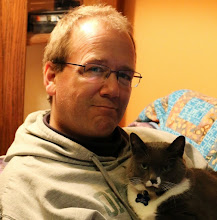
1. What very famous athlete is shown here in his youth?


2. What noted actor is shown here in his youth?

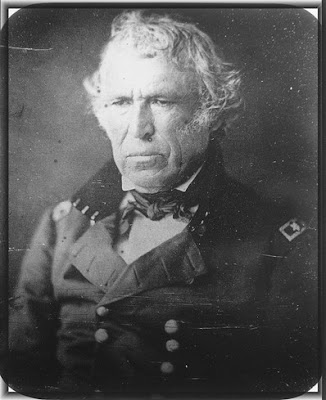
3. Who is this leading figure in... in... well, American letters, I suppose you could say?


4. Why, it's the legendary entertainer _______________!


5. Who is this "Rough and Ready" gentleman?


Submit your answers, and your best guess at the theme, in the comments.

Sunday, March 29, 2009

Ribbing Mondrian


This is a post that I wrote for my quilt blog a few weeks ago. But it might have a general dork appeal for those who, for whatever strange reason, are not interested in quilts.

Synchronicity, part 1

So last summer Mrs.5000 found this big box of scrap corduroy for a buck at a garage sale and hefted it home a good mile or something so she could give it to me for my birthday. Mrs.5000 understands me.

Meanwhile, in 1921, Piet Mondrian painted one of his famous grids of rectangles and primary colors. (Neoplasticism, I think the genre is called. The de Stijl movement! i iz likes art history.) This particular one is usually called Composition in Red, Yellow, Blue, and Black.

Thesis, Antithesis, Synthesis

And so eventually the idea of "What shall I do with the corduroy?" rattling around in my head ran up hard against the idea of "you know, of all the painting genres, the de Stijl stuff is the one that would be most susceptable to a treatment in quilt form." From that collision was born a Bee in my Bonnet, which involved compulsive internet searches for the simpler of Mondrian's work and an appraising sifting of my corduroy trove.

Once I found Composition, I transferred its grid onto graph paper, made some very rough color equivalences, and started cutting. And when I say "rough" color equivalences, I mean a not-as-light-as-it-could be grey for white, burgandy for red, golden tan for yellow, and a dark, greenish blue for blue.

Nevertheless, I am very happy with my little "Mondrian Quilt" face. Indeed, I bet its one of the best adaptations of Mondrian in scrap corduroy to have been achieved on the West Coast this year! (Libby, commenting on the quilt blog, was so kind as to say she thought it would be in the top five corduroy Mondrian adaptations nationwide this year. I am happy to take her word for it.)

Thursday, March 26, 2009

The michael5000 Kitchen #7: "Marvelous Minestrone"

Provenance: This recipe is printed on a half-page handout from the Lawrence, Kansas Community Mercantile natural foods co-op. The Mississippi Street address indicates that I picked it up sometime between about 1993, when it moved to that location, and 1997, when I (by that time living some 90 miles away) stopped shopping there. I do not recall ever using the recipe, which is elaborate enough that I probably would remember, nor are there any significant stains or other signs of use on it. I am a little puzzled by a small happy face in what looks like my own penmanship on the recipe card. What might that indicate? That I actually DID make the recipe and liked the results? That I thought it looked tasty, but never got around to making it? Or was there some other motivation to draw a smiley face, now lost in the mists of time? We’ll never know.


The Recipe:

2 Tablespoons Olive Oil
4 – 6 cloves minced or pressed Garlic [I used 5]
1 large Onion, chopped
2 medium Carrots, chopped
4 – 5 stalks Celery, chopped [I used 5]
2 Tablespoons fresh chopped Parley
1 Tablespoon dried Basil
2 teaspoons dried Oregano
1½ teaspoons Black Pepper
1½ teaspoons Salt (or to taste)
3½ Tablespoons Red Wine Vinegar
2 Tablespoons “Sweetener of Your Choice.”
5 – 7 cups “Water or Stock”
4 medium-sized Tomatos
1½ cup Green Beans, cut to 1” lengths
2 cups cooked Navy Beans
6 – 8 ounces Pasta

Heat Olive Oil in a large soup pot over medium heat. In it, sauté the Garlic, Onions, Carrots, Celery, Parsley, Basil, and Oregano for several minutes. Add Pepper, Salt, Vinegar, Sweetener, Water or Stock, Tomatoes, and Green Beans, and simmer over low heat until vegetables are tender but not falling apart. Add the beans and cooked pasta and heat through. Serve with grated Parmesan or Asiago cheese.


The Results:

This is a recipe that contains within itself a certain latitude of interpretation, which I suppose is appropriate for a traditional dish like minestrone. For some of the simpler choices, I used 5 cloves of garlic, 5 stalks celery, and 8 ounces of pasta, the latter concept (i.e. measuring an ingredient by weight) requiring the purchase of my first ever kitchen scale (I picked up a new set of measuring spoons too, while I was at it). For the “Sweetener of My Choice” -- did I mention this recipe came from a natural foods store? -- I used White Sugar, the traditional sweetener of my people.

The 5 – 7 cups of “Water or Stock” presents a vast range of possibilities. I used a carton of Trader Joe’s Vegetable Broth, which turned out to be four cups, plus a cup of Water, plus a cup of Red Wine, which an asterisk suggested as a stand-in for one cup of Water or Broth. That brought me to six cups of liquid which, with 8 ounces of pasta, made for rather too little broth in the mix. I believe I’ll try for 7 cups of liquid and 7 ounces of pasta on the next go around.

Despite the long list of ingredients, the recipe posed no special problems once I bought the scale. I do always groan, though, at recipes that call for a quantity of “cooked beans.” I have no idea how much the various beans swell when cooked, so I will always end up (as now) with the amount that actually ends up in the recipe, plus a huge surplus of boiled beans in the fridge, plus another surplus of dried beans that I overbought, always thinking for some reason that a cup is much bigger than it actually is.

Oh, how did it taste? Pretty good! It had, Mrs.5000 noted, a bit of a “bite,” but I think that is due to me accidentally putting in 2 Tablespoons rather than teaspoons of Oregano. By the time we were done with the stuff, we were calling it "Oregano With Vegetables." Must learn to be more attentive to recipe measurements.

It is worth mentioning, too, that this is probably one of the healthier recipes in my files. It is probably better for you, for example, than the Better Than Robert Redford dessert. It can now join the salsa at El Burrito Loco on 82nd Avenue as a food that I can use to sneak that most vile of fruits, the tomato, into my diet. I can’t believe I actually purchased and cooked with four of those things, but you know me – anything for a project.

Wednesday, March 25, 2009

The Thursday Quiz LXXVII

The Thursday Quiz!

The Thursday Quiz is a twelve item is-it-or-isn't-it test of your knowledge, reasoning, stamina, and moxie!

Remember always the Fundamental Rules of the Thursday Quiz:

1. The Thursday Quiz is a POP quiz. No research, Googling, Wikiing, or use of reference books. Violators will never be able to look at themselves in the mirror again.

2. Don't get all stressed out about it! It's supposed to be fun!

Movies of Alfred Hitchcock

Which of the following IS or ISN'T among the films of the portly legend?

1. Anatomy of a Murder

2. The Apartment

3. Breakfast at Tiffany's

4. Charade

5. Lifeboat

6. North by Northwest

7. Notorious

8. Rope

9. Sabotage

10. Strangers on a Train

11. Touch of Evil

12. The Trouble with Harry


Submit your answers in the comments.

Tuesday, March 24, 2009

Let's Talk About the Flag of Angola!

It has been a while since we had a post on that dorkiest of our core topics: flags. So I perked up the other day when I noticed that the Angolan dude with whom I am playing online chess was represented by an unfamiliar looking flag. I was naturally expecting the familiar old Angolan flag that we all know and love.


This banner, you'd have to admit, embodies some of the core flaggy virtues. It is graphically simple and direct yet highly distinctive. It is immediately recognizable, and visually arresting. But it turns out that there are people, including possibly some actual Angolans, who have some reservations about this flag. Their criticisms are at least three.

1) The sickle and hammer concept is a little out of fashion.

2) Using a machete as your national symbol in an African republic could be construed as kind of, um, insensitive.

3) Perhaps most importantly, the flag descends directly from the banner of the largest of the colonial-era resistance movements in Angola, which subsequently became the dominant political party. Thus it is perhaps not the best symbol for a nation giving multi-party democracy the old college try.

A suggested alternative, and the flag that is being used by chess.com, is this:


The design in the middle is apparently derived from some famous Angolan prehistoric cave paintings, thus representing a tie to the ancient past.

It seems that chess.com is jumping the gun somewhat, though. I checked out the website of the Angolan Embassy to the United States, and there is no reference to this new banner to be found. In fact, I'd have to say that the embassy is still rocking the old flag's symbolism mighty hard.

There is, unsurprisingly, precious little media coverage of this issue to be found. The best I can do is off the Wiki, which sayeth:

Many Angolans dislike the flag proposal because they feel it has no real meaning, as opposed to the current flag which clearly has historical associations. Others are of the opinion that the proposed flag cannot be seen as uniquely Angolan because it resembles other national flags including the flags of Costa Rica and North Korea.
What do YOU think, gentle readers? Allowing that the final decision is, of course, nobody's business but the Angolans'. But what should be the L&TM5K Community's amicus brief on the matter?